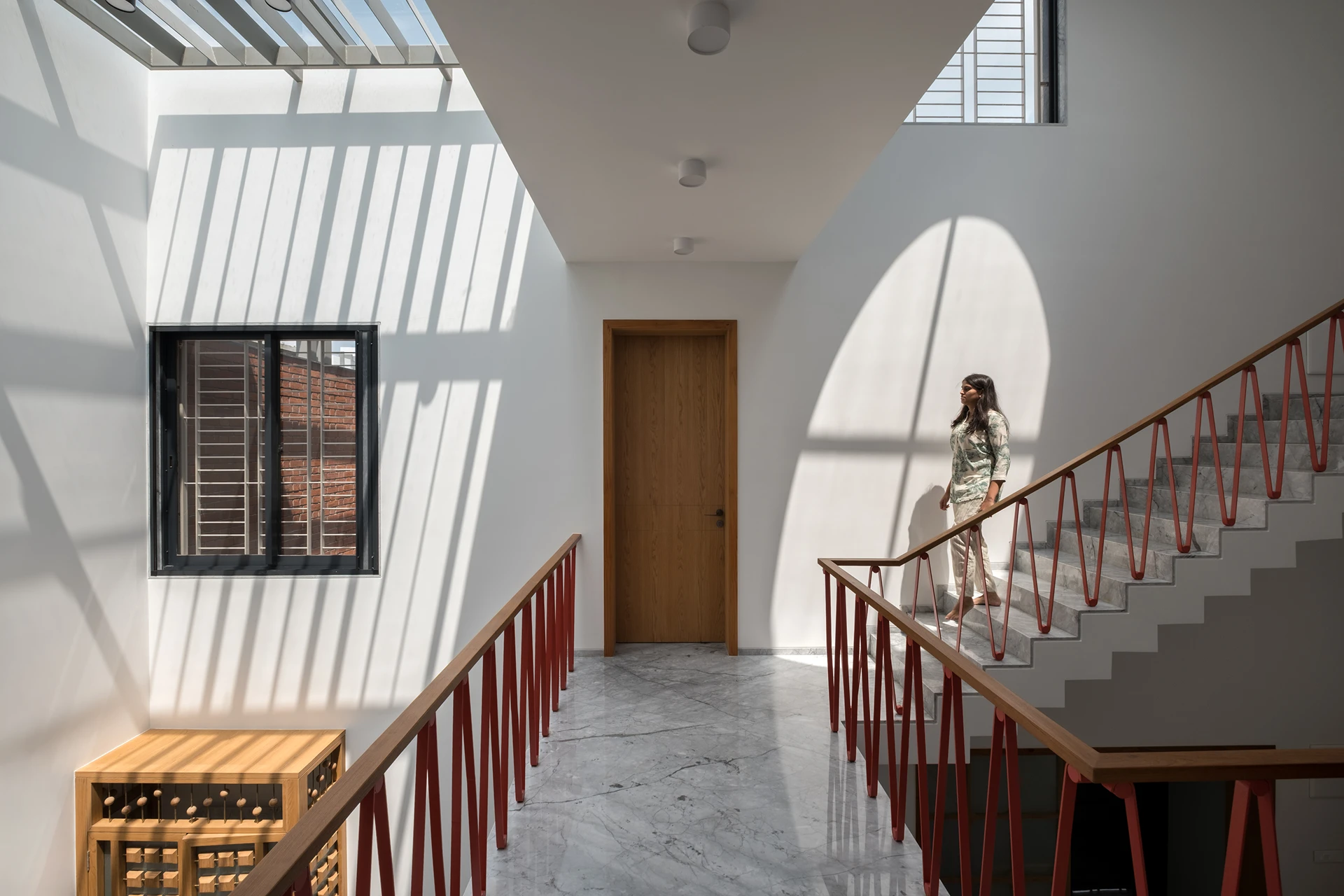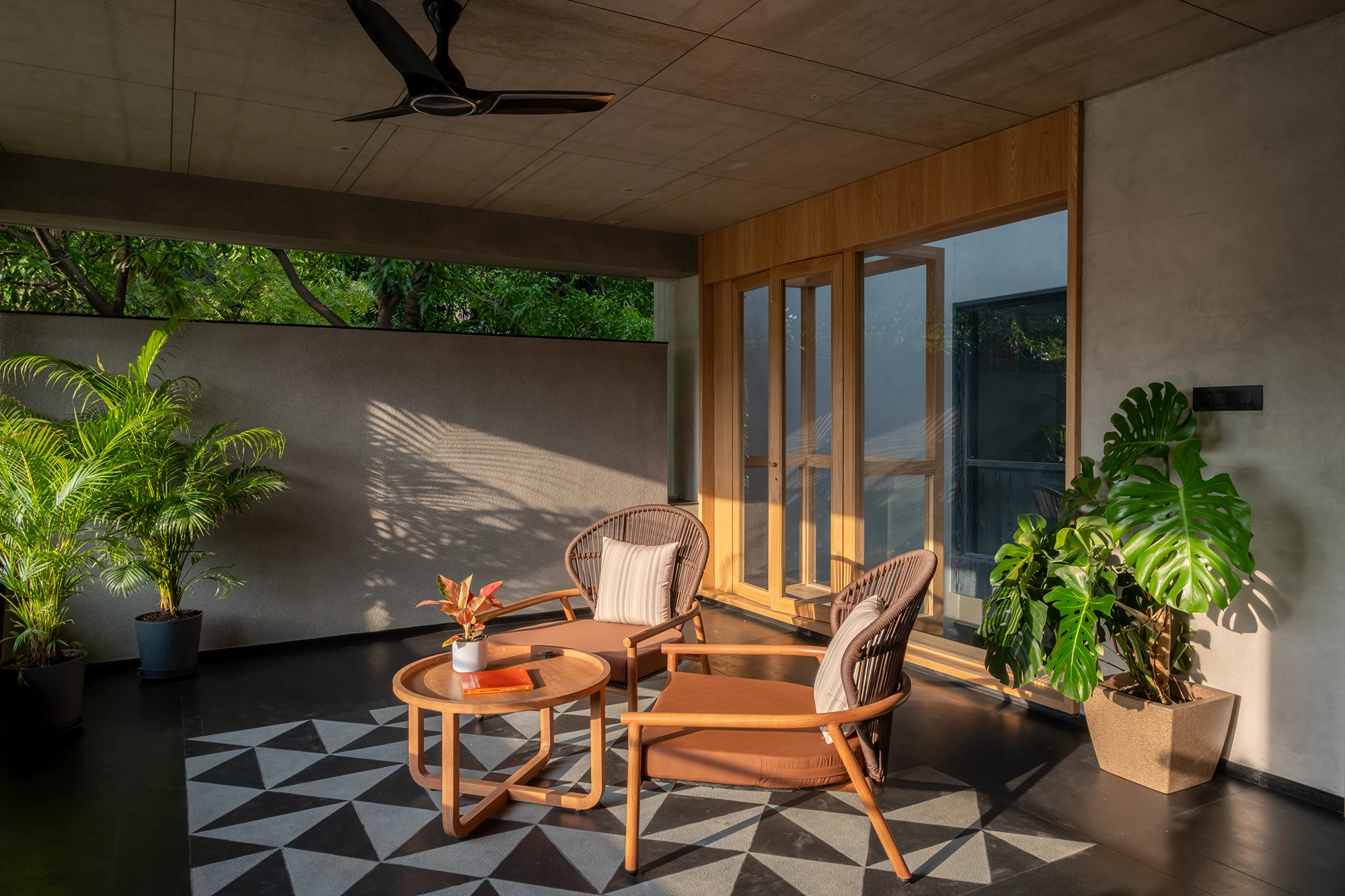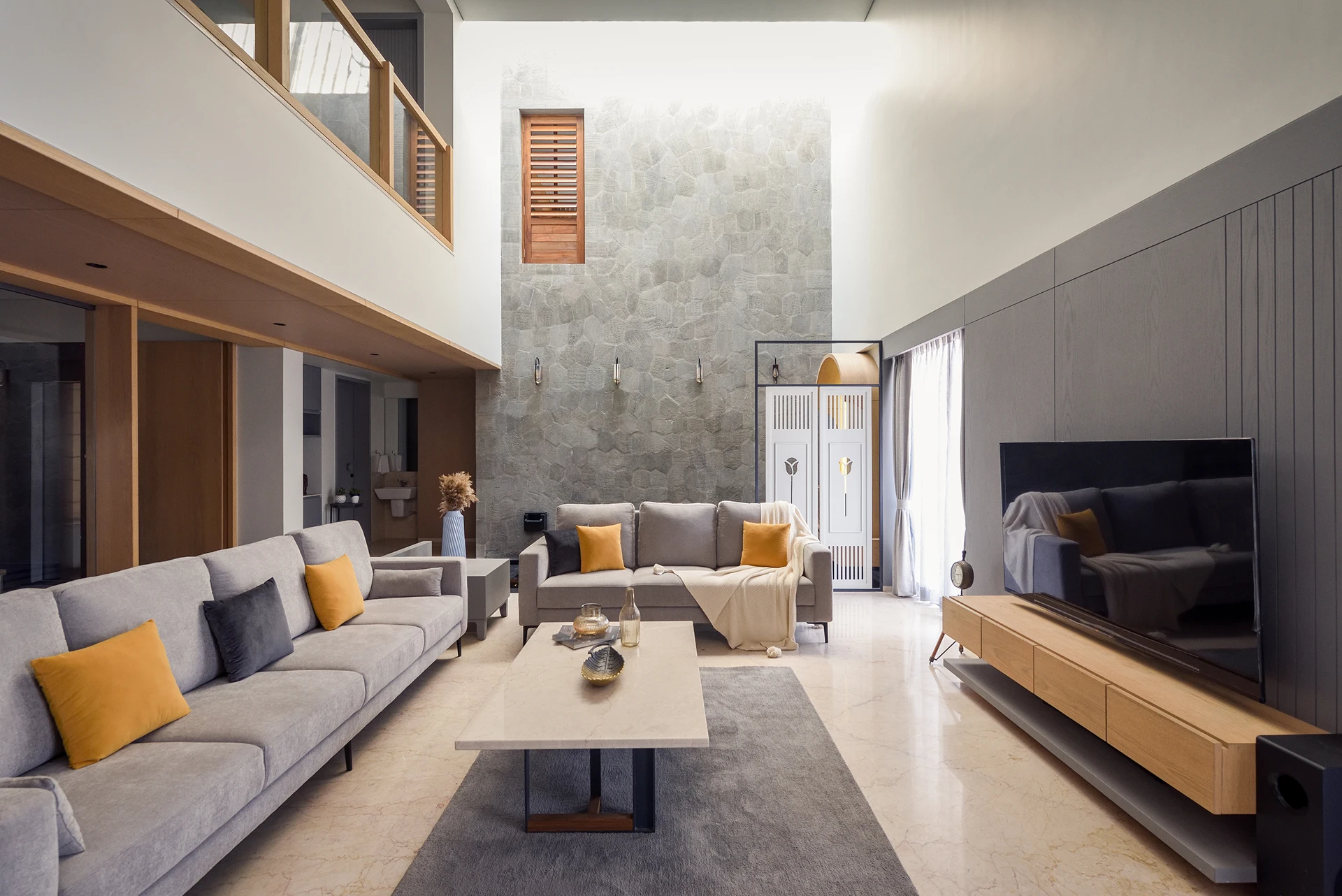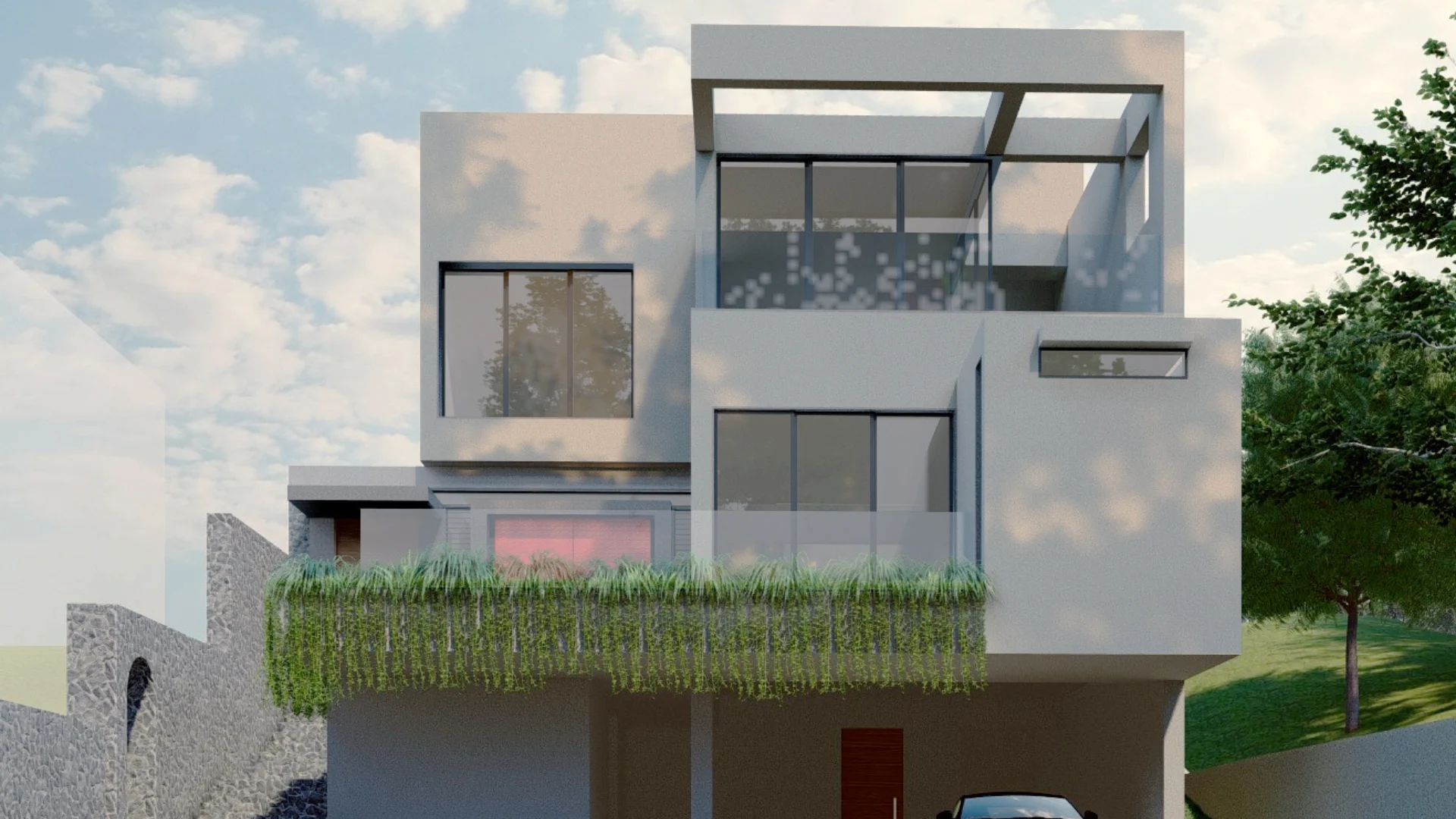
Designing on contoured sites is always a pleasure. Take the Tapkir House, for instance, an ongoing project with breathtaking views. Our immediate thought was to create large windows and terrace gardens to fully appreciate these vistas. Additionally, to bring the outside in, an expansive courtyard and skylight combination is introduced inside the house.
The clients wanted a simple, minimalist home without any external decoration or panelling. This inspired us to get creative and experiment with filler slabs and terracotta pots in the ceiling of the living room and bedrooms. The intention was to turn them into focal design features, highlighting the architectural structure of the home.
A little backstory about us: We are friends-turned-business partners. We met in architectural college, and ever since, our journey in the field has been entwined. So when we were approached by a similar client, and they told us about their two-decade-long business relationship, we could instantly empathise with their family dynamic and understand their expectations. From that point, this became a deeply personal project for us. We were determined not to compromise on their vision or our architectural integrity.
The clients in question are two avid travellers with a fondness for the comfort and aesthetics of resorts. When they first approached us to design a Twin Bungalow, they were hesitant about how the contoured plot would be perfect for hosting social gatherings and homely weekend getaways. However, one quick visit and we could recognise the site’s potential.
What we did not anticipate were the numerous site challenges: the remote location posing difficulties in sourcing materials and managing labour, the groundwater scarcity and the need to manage surface run-offs in the moderate rainfall zone. But what fun is a site without some challenges? So, we re-initiated the design process with a Landscape Consultant on board to overcome these hurdles.
The Unexpected Site Turmoil
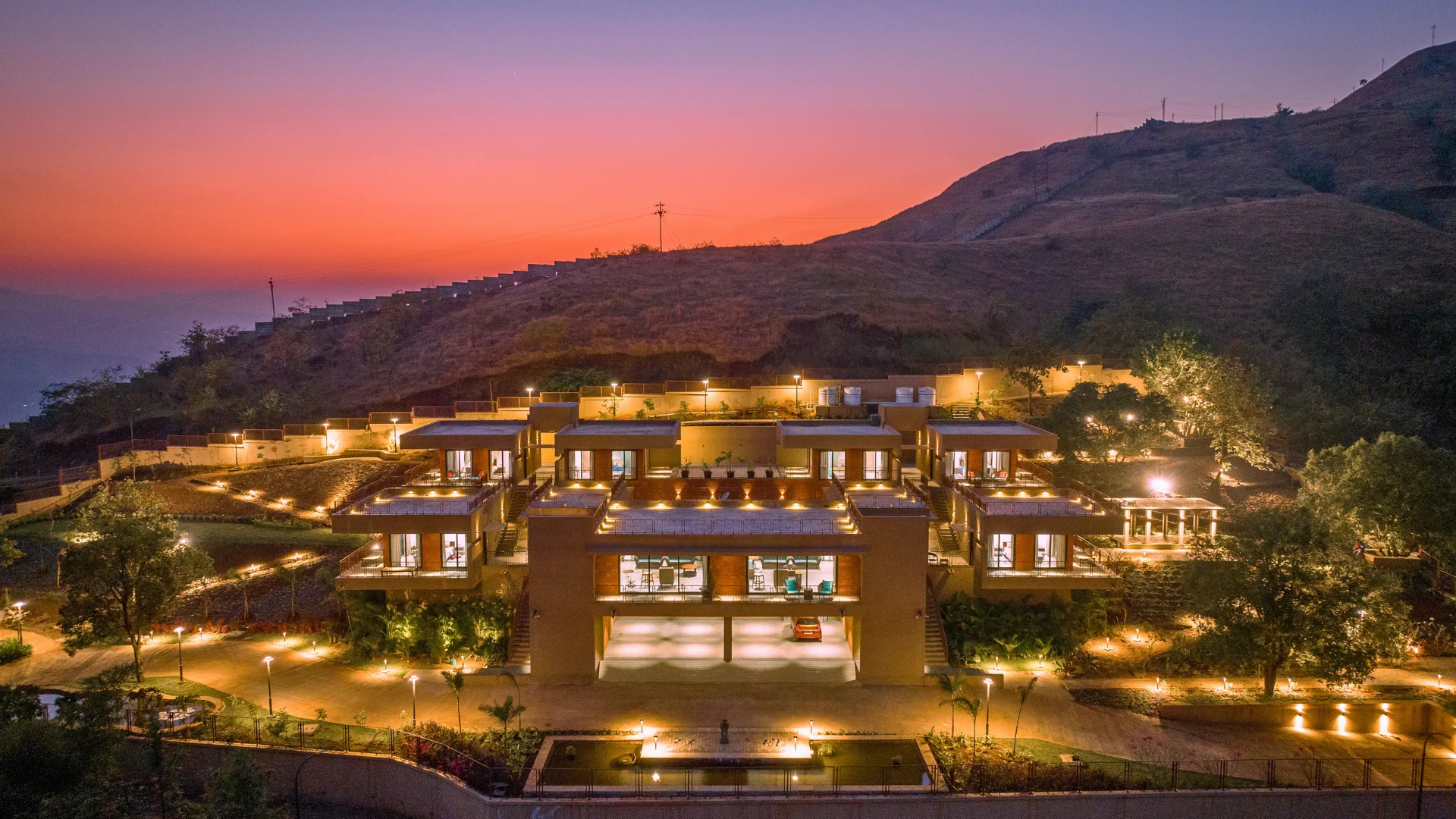
Venturing into Brutalism, the Twin Bungalows project presents a playful exploration of mass, scale, and privacy through rectilinear forms. By purposefully avoiding ornamentation and burdensome weekend home maintenance, the architectural planning thoughtfully responds to the site on a macro level, while the spacious interiors cater to the functional needs and lifestyle of the social families.
Factoring in the region’s scorching summers and unpredictable monsoons, the choice of Laterite stone as the star material is intentional, ensuring both durability and beauty. A complementary material palette of leather-finished Kota Stone and sliding glass openings, paired with metal handrails and exposed gutter details, further accentuate the bungalow’s distinctive Brutalist characteristics.
Planning Strategies: A Three-Level Approach with a Central Shared Area for Visual Connectivity
The planning process embraces a strategic approach, consciously maximising the utilisation of the natural contours. Dividing the site into three distinct levels, each dedicated to a specific zonal character: the lowermost contour houses the parking and a dog kennel, while the mid-level comprises communal spaces, two guest bedrooms, and a shared pool area. The topmost level incorporates the remaining four private bedrooms.
Zooming in, each bedroom extends to an L-shaped balcony offering the luxury of private views and a connection to the outdoors. Rendering adaptability in space utilisation, the bungalows are divided by a sliding-folding door, allowing for the flexibility of expanding or separating the living area as the situation demands. The two spacious dining rooms enjoy their own pool access and adjacent kitchens. A pre-planned demarcation is devoted to accommodating a lift in the future.
Propelled by instincts, the initial plan proposed an infinity pool embracing the breathtaking Khadakwasla lake. Contrarily, the clients desired a swimming pool that could be enjoyed intimately within an enclosure. As a result, the pool is now placed in a courtyard-style void, further becoming a binding element for all spaces within the Twin Bungalows. It also negates any sense of isolation for the occupants by establishing connectivity and visual continuity throughout the property.
Given the site characteristics, privacy and a sense of safety are primary concerns for the users and a challenge for the designers. By meticulously crafting the circulation layout, each room of the two bungalows trails a unique path of accessibility while maintaining visual connectivity. This thoughtful approach allows for flexibility in usage, as even if one area of the house is occupied, the other remains locked and undisturbed.
Rainwater Harvesting Cycle: A Step towards Sustainability and Self-sufficiency
With limited access to city services, the project anticipated a water supply crisis. To address this, ingenious rainwater harvesting strategies were set into motion well before full-paced construction commenced. Three substantial reservoirs and overhead tanks efficiently collect and store rainwater.
In contrast to the conventional approach of collecting rainwater from slabs and giving it a directional flow through pipes, exposed gutter details came into play. Leveraging the combination of heavy rains, steep contours, and the force of gravity, these gutters effectively guide the flow of rainwater. They also add a visual element—inspired by Brutalism—elevating the distinctive identity of the robust facades. Moreover, sleek horizontal slits integrated into the vertical planes of the terraces artfully break the monotony of the facade while protecting from heavy downpours.
Designing for family friends is a special process. It allows for trust to guide conversations and adds personal connections to the architecture. When we were asked to design a friend’s 5 BHK bungalow in Baramati, our aim was to create a comfortable blend of form and function, ensuring each family member’s personality stood out.
The Brick Exterior
Since its inception, the vision for Shantiniketan’s exterior has been clear: an exposed brick facade that seamlessly integrates with its natural surroundings, yet commands attention with its bold and dynamic form. Positioned on a unique turn, the design capitalises on its elevation, offering intriguing views that hint at the interior’s narrative.
Apart from windows, deliberate framing of vertical and horizontal features in the facade draws attention to its architectural elements. Within this elegant framework, voids, projected terraces, and skylit atriums emerge as defining features, tying the design together.
The Free-flowing and Soothing Interiors
While the exterior is geometric, the interiors flow freely, incorporating various forms to avoid a cuboid, almost apartment-like feel to the entire layout. The deliberate use of turquoise blue, arched entryways serves as artistic highlights, reducing the need for excessive wall panelling. Cladding is avoided wherever possible, transforming the interiors into a celebration of simplicity with intent. A selective material and colour palette are employed to create a resoundingly calming effect throughout.
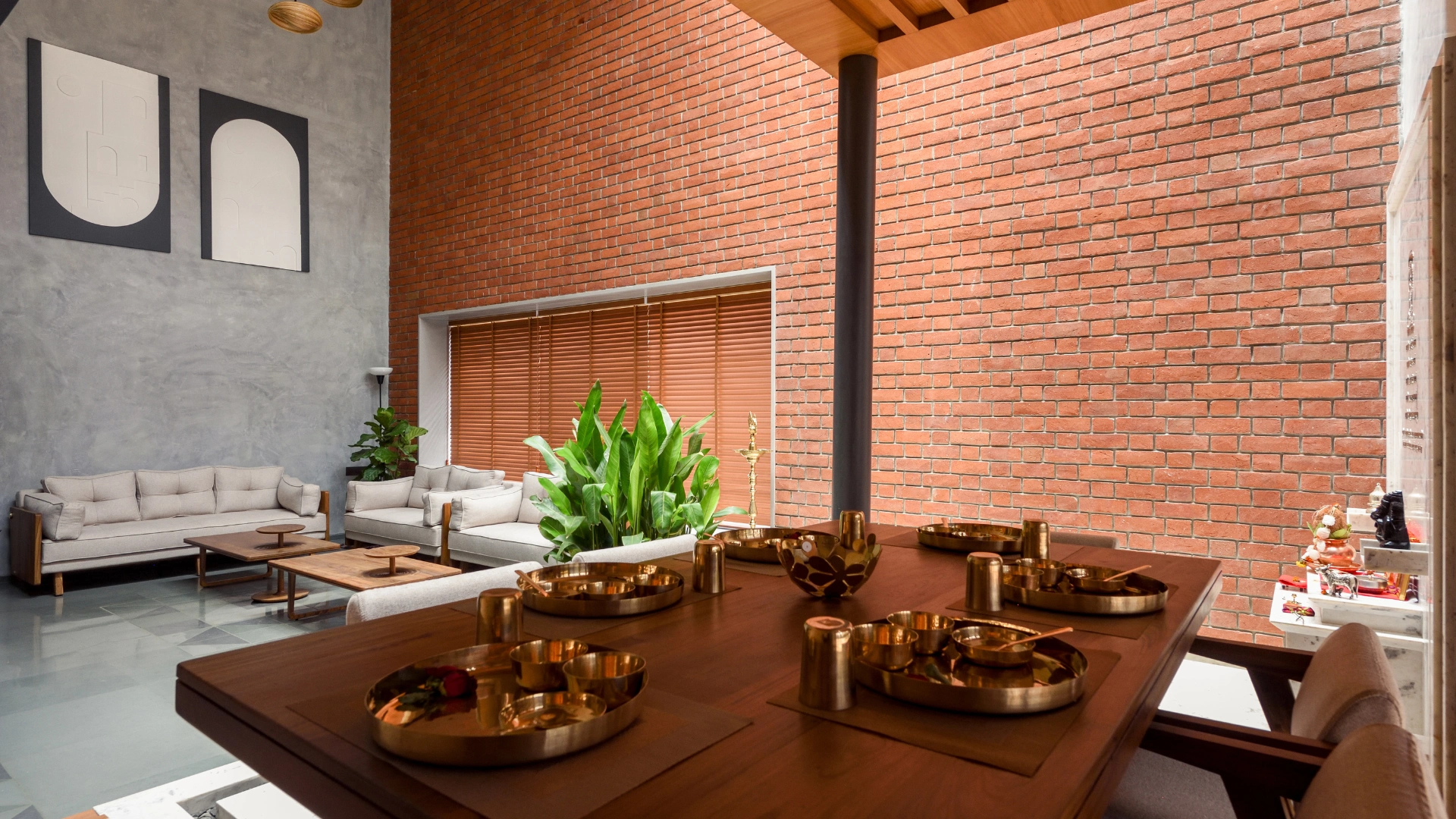
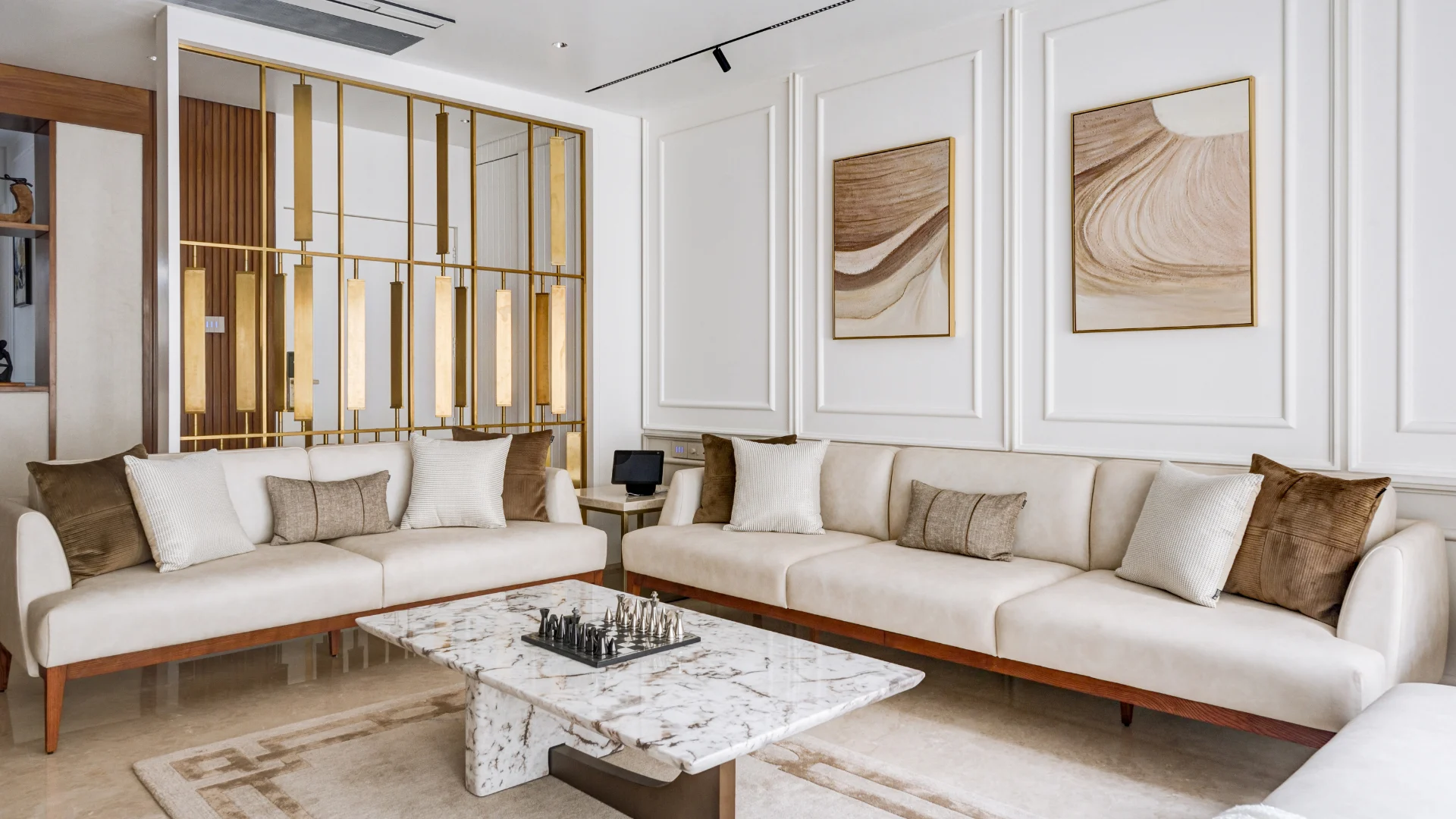
Catering to the needs of a social family, the living room features flexible seating that can be rearranged for functions, facilitating easy movement and creating an inviting atmosphere for family gatherings. On the other side, a breezy dining awaits. Hosting friends and family is a delightful aspect of small-town culture, often accompanied by the joy of preparing meals for guests. Therefore, a functional and airy kitchen, bathed in ample natural light and ventilation, became essential. This is complemented by an adjacent dining area designed to encourage effortless movement and engaging conversation.
Opening to the backyard on one side, the dining space enjoys a semi-enclosed ambiance, seamlessly connecting indoor and outdoor living. At its centre, the dining table, crafted from a blend of traditional sagwan wood and contemporary steel polish, perfectly captures the project’s blend of aesthetics. Above, the ceiling design incorporates wooden elements and an artistic chandelier, adding character to the space.
The Courtyard
Right from the beginning, we wanted to ensure that the expansiveness of a bungalow does not evoke a sense of isolation. Hence, the inclusion of a courtyard became a fundamental aspect of the plan. Together, the courtyards, double-height dining area, and staircase form the heart of the home, ensuring consistent visual and vertical connectivity.
The entrance to all rooms opens up to this heartwarming core, ensuring that every family member is just a glance away. In unison, it functions as a space where conversations flow freely, mirroring the fluidity of the design.
The Vibrant Bedrooms of Shantiniketan
Extending the relaxing and peaceful environment right up to the bedrooms, the main bedroom embodies this theme with soft light blue accents, carefully chosen to evoke a profound sense of calm. The clean lines in the room emphasise simplicity, while the sleek metal legs on the bedside table add a touch of modernity.
The grandparent’s bedroom follows suit with a palette of soothing green hues, complemented by timeless wooden elements. Safety features, such as grab bars near the bed, have been thoughtfully incorporated.
The son’s bedroom, on the other hand, demanded a more contemporary approach, leading us to a four-poster bed and a wardrobe featuring fluted glass. However, the striking deep cobalt blue feature wall dives right back into the serenity theme.
Reflecting the personality of the sweetest member of the family – the daughter – was quite a challenge. We ultimately decided to go with soft pink pastels and cosy whites with wooden mouldings to add a touch of warmth and culture. The room also enjoys a unique feature – a small balcony of freedom, opening right into the courtyard.
And for the family room, maintaining easy connectivity with a layer of privacy was essential. This was achieved through wooden louvres framing the windows, facilitating a connection to the courtyard while preserving privacy. The soft arches woven throughout the design added a graceful touch, tying everything together.