Portfolio
Katariya House
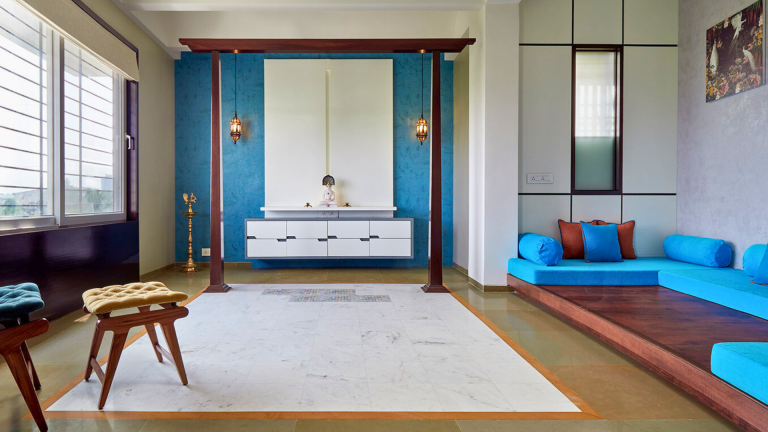
Vernacular architecture and design hold a special place in our hearts. It is so deeply rooted in our experiences and encounters that we always look forward to digging into those memories and shaping a home accordingly. Needless to say, we were thrilled when we had the opportunity to do so with the Katariya House. The client’s brief was simple: a traditional, minimalistic interior that would not only fulfil their functional needs but also address privacy and social requirements.
Through continuous interaction with the client and understanding their interests, values, opinions, altitude, and lifestyle, we developed a Transitional Style. With the final design, our aim is to showcase the bond between their traditional roots and their modern minimalist lifestyle, achieving a sense of balance that is both appealing and unexpected.
In the living room, we’ve avoided a false ceiling to maintain clear height and a sense of grandeur. Further, simple track lighting in passages and cylindrical surface lighting is utilised to enhance different volumes. The use of natural yellow tandoor stone for flooring imbues it with a perfect vernacular Indian wada touch. Additionally, the diwan, custom-made sofas, brass accents, and chequered Shahabad pattern in flooring (designed to create a carpet or chattai effect) add a traditional touch.
A fusion style incorporating different textures such as wooden furniture, brass accents, authentic Indian artwork, and bright upholstery flows throughout the home. The living room further leads to the mandir area with marble inlay flooring. Adjacent to it is the informal living room with low-height seating options for relaxed interactions.
On the opposite side, a passage leads to the bedrooms. At the client’s request, the main bedroom features yellow Jaisalmer stone flooring with a vintage-themed white four-poster bed and a minty turquoise hue background panel to perfectly balance the focal elements of the room. In the daughter’s bedroom, wood, exposed brick, and vibrant upholstery come together to create a modern, eclectic vibe, while in the sons’ bedroom, the ambiance is more moody with dark fabrics, indirect lighting, and varying shades of grey aesthetic.
Mavdikar House, Pune
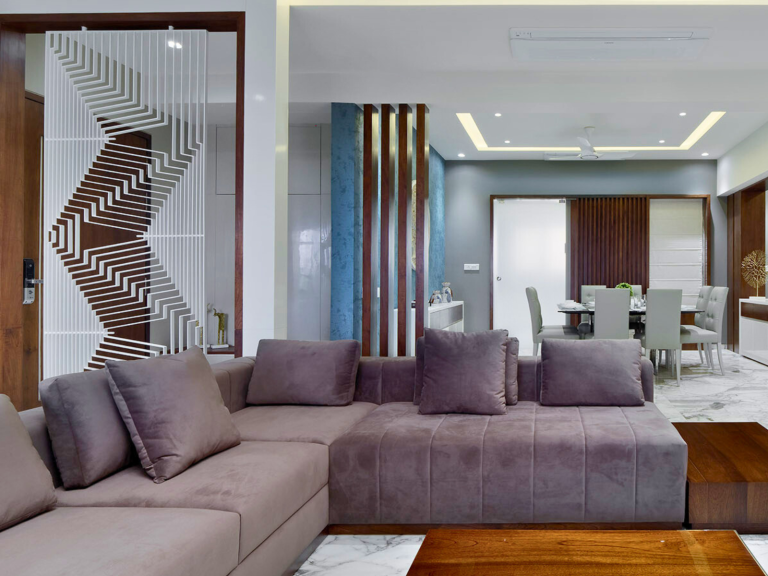
When working on interiors, it’s rare to find spacious and free-flowing communal areas that seamlessly bind the home together. However, we were thrilled to discover that the layout of the Mavdikar House already included an enormous living area with smooth connectivity to the kitchen and dining. We decided to further enhance this living room, transforming it into a space perfect for both large gatherings and intimate conversations, with additional corners carved out for relaxation and unwinding. Moreover, the room enjoys a phenomenal view, so we oriented the furniture to face it, making it the focal point of the space.
The overarching theme of the home revolves around simple detailing devoid of decoration, strategic use of materials for visual interest, texture, and personality, featuring uncomplicated claddings and wall finishes, and clean, open spaces flooded with ambient light.
Adjacent to the living room is the dining area, adorned with custom-made furniture and curated antique pieces for a traditional touch. Between the dining area and the reading corner, a tailored bookshelf-cum-partition unit offers privacy while maintaining visual connectivity.
While the communal area boasts traditional furniture accents, the bedrooms draw inspiration from a European aesthetic, featuring painted accent walls and soft, neutral furnishings. The main bedroom adopts a turquoise blue and white colour scheme with ample greenery adding a refreshing hue to the design. To fully appreciate the view and natural light, the bedrooms purposefully avoid partitions, employing halftone, neutral colour schemes and minimalistic furniture to create a spacious layout conducive to relaxation.
Magnus Parkway
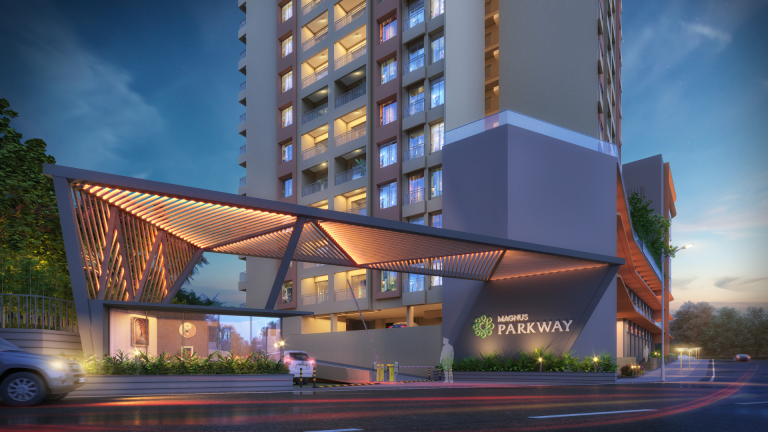
Mass housing projects are always a test of architectural ingenuity, but when confronted with a triangular plot flanked by major roads on two sides, the challenge reaches new heights. With one side designated for a bustling commercial complex and the other for peaceful residential living, finding the right balance is crucial.
For a functional massing, we carefully separated the commercial area, ensuring easy access and visibility from the main roads. Additionally, a bridge was added to connect different parts of the commercial complex.
For the residential tower, the intent was to create a serene retreat amidst the urban landscape. The ground floor features recreational amenities like a sports court, acupressure park, and Nakshatra tree garden. Upstairs, spacious apartments offer residents a comfortable living space, complemented by a landscaped podium area with a small temple and swimming pool.
Mudra House

In our relentless pursuit of merging vernacular design with modern lifestyles, one project remains etched in our memory as an all-time favourite: the Mudra House. An innovative endeavour, it marks one of our first experiments with introducing a water element into communal areas and diving deep into thoughtful, tailored furniture inclusions throughout the home.
When the client initially approached us, the goal was to merge two adjacent residential units to create a spacious home entirely based on Vastu principles. The client’s preference for Indian architectural aesthetics further motivated us to incorporate vernacular elements into every space while avoiding unnecessary panelling and decoration. To highlight the original architectural structure of the space, a neutral colour palette flows throughout the home, with dominant wood furniture complemented by metal accents and vibrant colours in furnishings.
Both the formal and informal living rooms feature subtle wooden detailing, with the tailored showcase unit stealing the focus. On the opposite side of the living room lies the water element, discreetly leading to another informal living area and the mandir. The water element is envisioned as a sensory experience, allowing one to step into the water before entering the mandir.
Ergonomics and climate-responsive elements take centre stage in the bedroom design, influencing every choice, from the louvred windows to the green wall and the low-height furniture with additional and flexible supports, among other elements.
Splendour Country
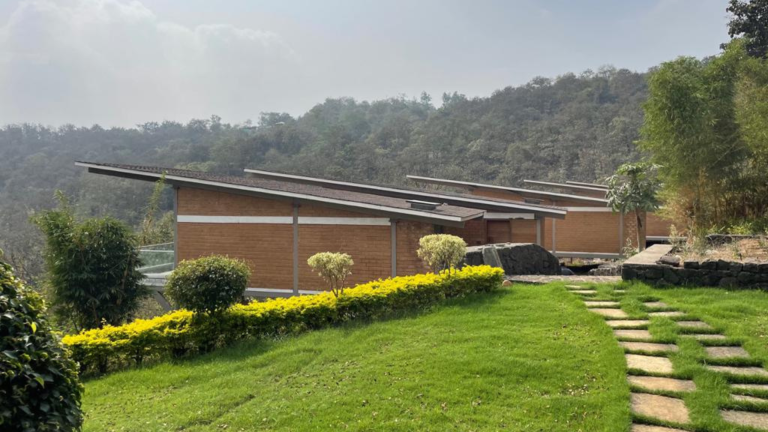
As the owners of Splendour Country soaked in the breathtaking view from the cricket box pitch, they lamented its occasional use. With talks of expanding the residential facilities underway, an idea struck. A couple of days later, we were approached to design 8-9 temporary, experimental, and “instantly attractive” cottages on the very same land.
The challenge was to erect these cottages overlooking the magnificent vista without disrupting the natural terrain. Seizing the opportunity to experiment with simpler structural solutions on complex landscapes, we utilised CSEB Blocks and mild steel framing, while repurposing leftover shingles from the banquet hall construction to stay budget-friendly. As requested, the structure could be easily dismantled in the future, with materials reused or recycled on-site. Today, the cottages gracefully follow the curvature of the contoured landscape of the Khadakwasla hills, allowing residents to relish the splendid views.
Tapkir House
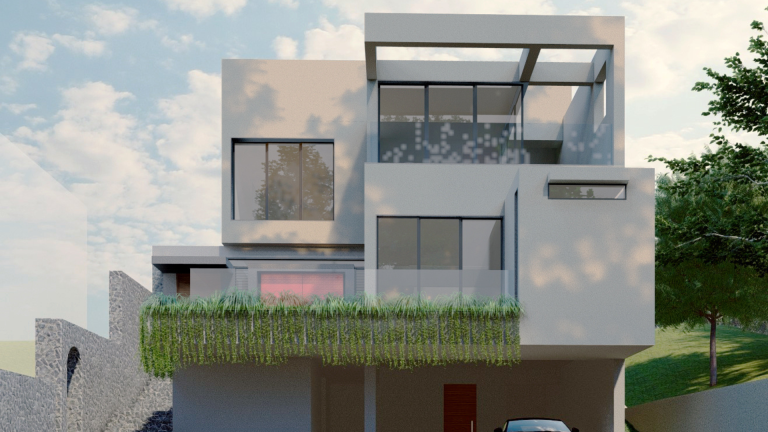
Designing on contoured sites is always a pleasure. Take the Tapkir House, for instance, an ongoing project with breathtaking views. Our immediate thought was to create large windows and terrace gardens to fully appreciate these vistas. Additionally, to bring the outside in, an expansive courtyard and skylight combination is introduced inside the house.
The clients wanted a simple, minimalist home without any external decoration or panelling. This inspired us to get creative and experiment with filler slabs and terracotta pots in the ceiling of the living room and bedrooms. The intention was to turn them into focal design features, highlighting the architectural structure of the home.
Ayurvedic College
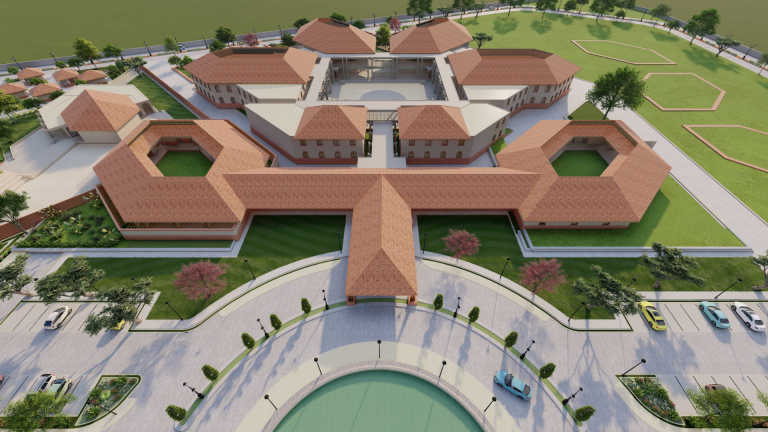
Campus planning is both a challenging and an immensely rewarding process, involving the careful consideration of diverse user groups and their potential activities across the plot. When we designed the Ayurvedic College for a competition entry, our initial focus was on symmetry, aiming to provide users with a clear sense of direction and connection. Thus, we curated a plan featuring a large central spine road leading to a circular arena at the centre, from which paths diverge to various buildings on each side. To enhance the campus experience, a segregated pedestrian walkway along the central spine is included for leisurely strolls.
Given the campus’s dedication to Ayurvedic education and healthcare, we naturally gravitated towards vernacular designs. This decision inspired the incorporation of courtyards, arched entryways, smaller dedicated rooms, and units with sloping roofs. Additionally, landscape design plays a crucial role in guiding users through the campus while offering moments of respite from the stress of the internal environment. In line with the theme of relaxation, we also integrated a spa resort next to the hospital area to provide an additional layer of tranquillity.
Shantai, Pune

Ever so often, you encounter someone with whom you sense an inevitable collaboration in the future—it’s just a matter of when and how. Our initial interactions with the Rathod family had that very vibe, and by 2022, the path forward became clear. We were tasked with rebuilding their family home, the Shantai bungalow.
Revamping the bungalow was no small feat, especially given the client’s unwavering commitment to preserving the original structure, crafted by his father. Once our structural consultants gave the green light after assessing the building, the real challenge emerged. This three-storey bungalow, with one side abutting a commercial office facing the road, presented a formidable obstacle. In a rare twist, our focus shifted from design to load calculations.
Though the process was new and demanding, the outcomes were equally rewarding. A modern facade took shape through meticulous fabrication, with additional columns carefully shouldering the weight of this new frontage.
As for the interiors, the client was resolute from the outset. Having spent a lifetime in a traditional home, the three-generation family now yearned for a contemporary space that mirrored their modern lifestyle. What’s more, the client had a discerning eye for every detail of his dream home, from sofa cushions to cutlery. Given the family’s stringent specifications and the challenge of accurately distributing load calculations, designing the home in a detailed 3D emerged as the best possible solution. Once every aspect was meticulously approved, construction commenced on site.
Today, with columns and foundations laid by the client’s father standing firm and intact, the bungalow boasts a contemporary charm, offering a modern sanctuary perfectly attuned to today’s lifestyle.
City Pride School, Moshi
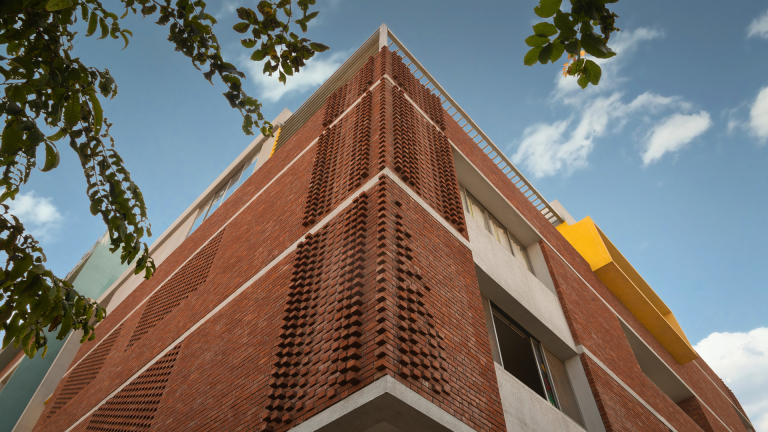
Our journey with the City Pride School Moshi is a heartfelt one since it marks our first venture into full-fledged brick exploration projects. Upon our initial visit to the site and hearing the brief for a primary and secondary school, we were immediately drawn to the idea of creating a raw and playful exterior that captures the carefree essence of childhood. It seemed only natural that brick would be the perfect medium for this vision, prompting us to delve into extensive research on various brick exterior projects to craft an innovative and captivating facade, complete with intricate jali designs.
However, our excitement encountered its first hurdle when the directors expressed reservations about the concept of a brick exterior. Thankfully, a visit to a renowned architectural project in Vadodara, Gujarat, showcasing exceptional brickwork, persuaded them to take a leap of faith and trust this experimental process.
The success of the project led to another exciting opportunity: designing the City Pride School in Ravet. While both schools share a similar design ethos, the site conditions here in Moshi allowed us to incorporate ledges, arches, and larger skylights, further enhancing the architectural charm and functionality of the space.
Tale of Twin Bungalows, Khadakwasla
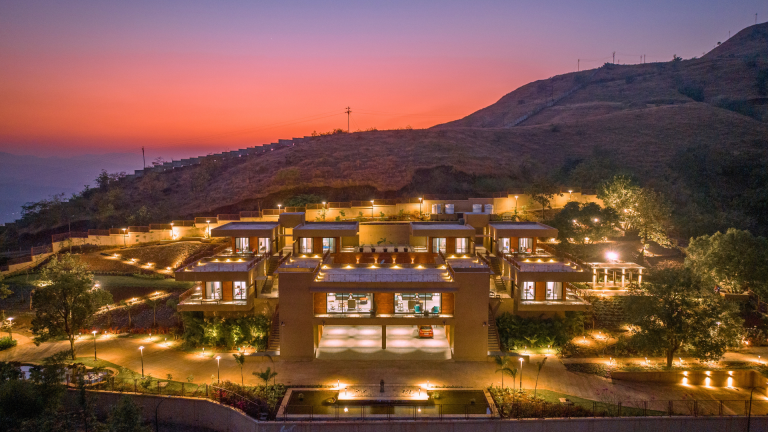
A little backstory about us: We are friends-turned-business partners. We met in architectural college, and ever since, our journey in the field has been entwined. So when we were approached by a similar client, and they told us about their two-decade-long business relationship, we could instantly empathise with their family dynamic and understand their expectations. From that point, this became a deeply personal project for us. We were determined not to compromise on their vision or our architectural integrity.
The clients in question are two avid travellers with a fondness for the comfort and aesthetics of resorts. When they first approached us to design a Twin Bungalow, they were hesitant about how the contoured plot would be perfect for hosting social gatherings and homely weekend getaways. However, one quick visit and we could recognise the site’s potential.
What we did not anticipate were the numerous site challenges: the remote location posing difficulties in sourcing materials and managing labour, the groundwater scarcity and the need to manage surface run-offs in the moderate rainfall zone. But what fun is a site without some challenges? So, we re-initiated the design process with a Landscape Consultant on board to overcome these hurdles.
The Unexpected Site Turmoil
Venturing into Brutalism, the Twin Bungalows project presents a playful exploration of mass, scale, and privacy through rectilinear forms. By purposefully avoiding ornamentation and burdensome weekend home maintenance, the architectural planning thoughtfully responds to the site on a macro level, while the spacious interiors cater to the functional needs and lifestyle of the social families.
Factoring in the region’s scorching summers and unpredictable monsoons, the choice of Laterite stone as the star material is intentional, ensuring both durability and beauty. A complementary material palette of leather-finished Kota Stone and sliding glass openings, paired with metal handrails and exposed gutter details, further accentuate the bungalow’s distinctive Brutalist characteristics.
Planning Strategies: A Three-Level Approach with a Central Shared Area for Visual Connectivity
The planning process embraces a strategic approach, consciously maximising the utilisation of the natural contours. Dividing the site into three distinct levels, each dedicated to a specific zonal character: the lowermost contour houses the parking and a dog kennel, while the mid-level comprises communal spaces, two guest bedrooms, and a shared pool area. The topmost level incorporates the remaining four private bedrooms.
Zooming in, each bedroom extends to an L-shaped balcony offering the luxury of private views and a connection to the outdoors. Rendering adaptability in space utilisation, the bungalows are divided by a sliding-folding door, allowing for the flexibility of expanding or separating the living area as the situation demands. The two spacious dining rooms enjoy their own pool access and adjacent kitchens. A pre-planned demarcation is devoted to accommodating a lift in the future.
Propelled by instincts, the initial plan proposed an infinity pool embracing the breathtaking Khadakwasla lake. Contrarily, the clients desired a swimming pool that could be enjoyed intimately within an enclosure. As a result, the pool is now placed in a courtyard-style void, further becoming a binding element for all spaces within the Twin Bungalows. It also negates any sense of isolation for the occupants by establishing connectivity and visual continuity throughout the property.
Given the site characteristics, privacy and a sense of safety are primary concerns for the users and a challenge for the designers. By meticulously crafting the circulation layout, each room of the two bungalows trails a unique path of accessibility while maintaining visual connectivity. This thoughtful approach allows for flexibility in usage, as even if one area of the house is occupied, the other remains locked and undisturbed.
Rainwater Harvesting Cycle: A Step towards Sustainability and Self-sufficiency
With limited access to city services, the project anticipated a water supply crisis. To address this, ingenious rainwater harvesting strategies were set into motion well before full-paced construction commenced. Three substantial reservoirs and overhead tanks efficiently collect and store rainwater.
In contrast to the conventional approach of collecting rainwater from slabs and giving it a directional flow through pipes, exposed gutter details came into play. Leveraging the combination of heavy rains, steep contours, and the force of gravity, these gutters effectively guide the flow of rainwater. They also add a visual element—inspired by Brutalism—elevating the distinctive identity of the robust facades. Moreover, sleek horizontal slits integrated into the vertical planes of the terraces artfully break the monotony of the facade while protecting from heavy downpours.